Quick Navigation
- 📈 Gambling Statistics for 2026 – Quick Overview
- 📊 General Gambling Stats & Facts
- 🏬 Top Gambling Markets
- 🎰 Economic and Social Impact of Gambling
- ✅ Future Online Gambling Industry Trends
- 💸 How Is Cryptocurrency Changing Gambling
- 🌐 Online Social Casino Trends
- 🎰 Most Popular Online Gambling Games
- ✅ Interesting Facts about Gambling
- ☝️ Responsible Gambling
- ✍️ Conclusion
- FAQs
The global gambling industry is bigger and more accessible than ever before. In 2026, it’s a digital ecosystem powered by mobile technology and data that is driving growth for established and emerging markets. However, there is a complex story behind the headlines.
If you are curious to learn how many people gamble, which countries generate the most revenue, and what the new trends are, you are at the right place. We’ll unpack the most important gambling statistics for 2026, using the latest available data, helping you understand where the industry is heading.
- The global gambling industry annually generates over $560 billion in revenue.
- Between 1.2 and 1.6 billion people gamble each year.
- Australian bettors have the highest gambling losses globally, averaging over $1,000 per player.
- Sports betting is one of the fastest-growing gambling sectors worldwide.
📈 Gambling Statistics for 2026 – Quick Overview
- Around 47–60% of Australians gamble annually
- The global gambling industry is valued at approximately $606 billion in 2026.
- Emerging markets, particularly Africa, are experiencing rapid growth driven by mobile betting and digital adoption
- Online gambling in 2026 was expected to reach $97 billion
- Mobile gambling accounts for 58% of online activity
- Men are more likely to engage in sports betting, while women show higher participation in lotteries and slots
📊 General Gambling Stats & Facts
We created visual presentations of the development of the entire gambling industry so we can better convey the numbers to you. Read on to see important gambling metrics:
🌎 Gambling Around the World
The most reliable estimates place the number of people who gamble each year worldwide at about 1.6 billion. However, this number reflects only active gamblers, while the number of people who have participated in some type of betting activity at least once in their lifetime ranges in the several billion. This estimate includes both land-based venues and online platforms.
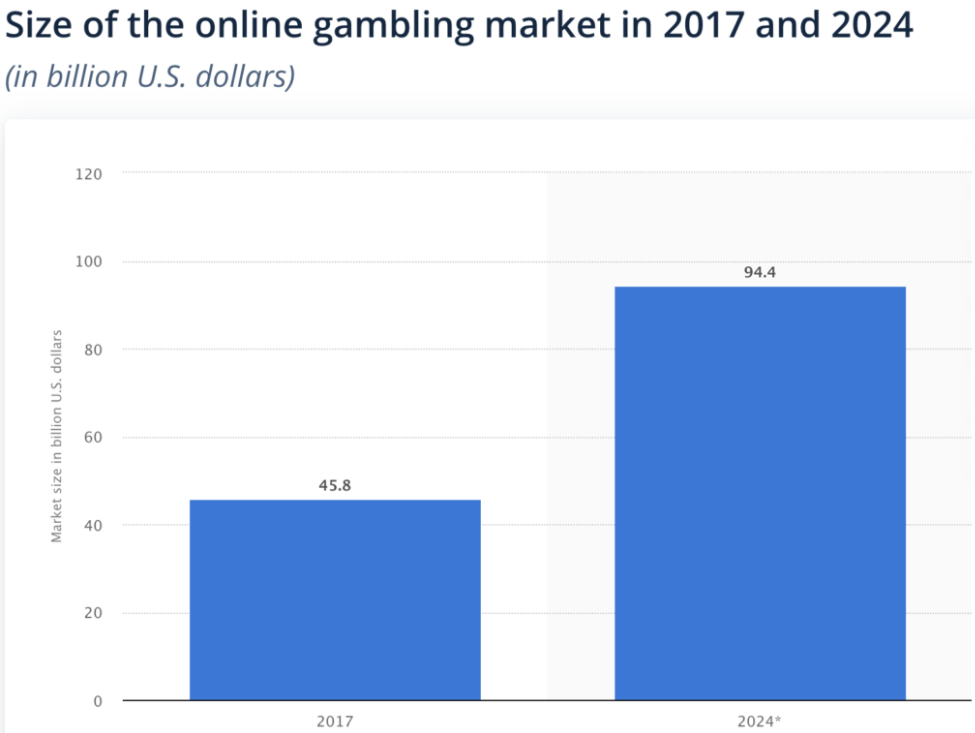
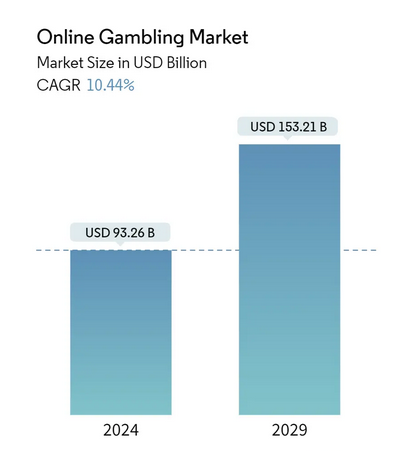
The increase in a player’s base fuels the growth of the online gambling industry. The most recent data makes this clear: the market was valued at $60–65 billion in 2022, but in just one year, it was valued at $80–90 billion. By 2029, experts from Mordor Intelligence predict the online gambling market will exceed $150 billion in revenue, averaging about 10% growth per year. This growth can be attributed to emerging technologies, the implementation of wider regulations, and a diverse selection of casino games.
🤵 How Many People Are Gambling?
Gambling is one of the most widespread forms of entertainment globally, cutting across cultures, age groups, and income levels.
We try to convey reliable, truthful information for you. Thus, we use studies and reports to bring you the following facts related to the biggest gambling markets:
- Based on a large meta-analysis published in The Lancet, about 46% of adults worldwide gamble each year
- Despite age restrictions in most countries, about 17.9% of adolescents gamble annually
- Participation varies widely by region and can range from 12% to 92%, showing major cultural and regulatory differences globally
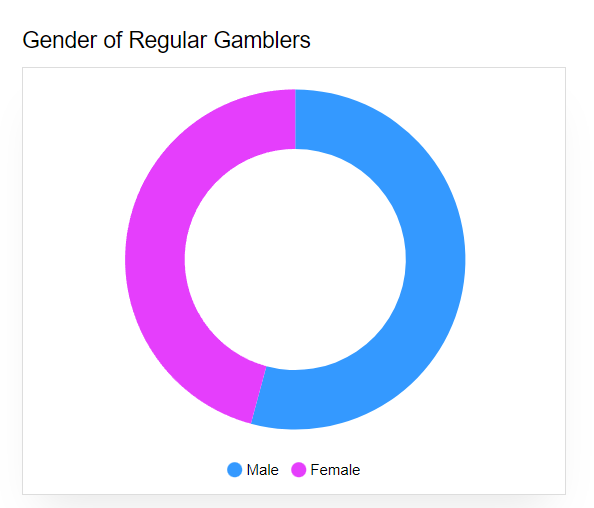
- Men are more likely to gamble than women globally with 49% of men vs 37% of women in global samples.
- Online gambling is rapidly growing, with around 7.8% of adults and 10.3% of adolescents gambling online.
- Approximately 1.2% of the global adult population has a gambling disorder.
Source: Mordor Intelligence
This information is relevant for estimating the number of people with gambling addictions, and for recognizing people’s online gambling behavior.
🃏 What Are People Gambling on the Most?
A lot of the global population have gambled at some point in their lives and this number seems to be increasing – especially thanks to online gambling. But what are they gambling on the most?
Sports betting has been the main choice of gamblers, with casino games taking the second place.
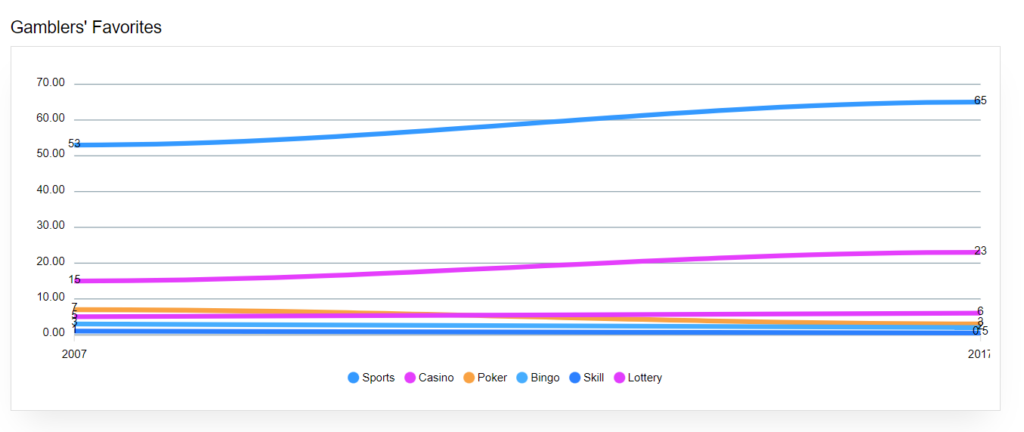
Both sports betting and casino games have grown from 2007 to 2017, while skill games and poker betting have lost their appeal. Lottery games are growing in popularity, albeit at a lower rate. Please note that the data above represents the total amount spent on these activities, and not the total number of players.
Based on reports from the UKGC and American Gaming Association, we can get a better picture of which casino games are popular in the USA, UK, and Australia. The most recent estimate shows that slot games are the preference of 53% of casino players. However, that is an aggregate comparative that does not survive an individual check:
- In the UK, bingo is still the preferred choice when it comes to casinos.
- Poker is much more popular in Australia than in the UK and the USA.
- Blackjack comes right after slots and poker for U.S. casino players.
💵 How Much Are People Spending on Gambling?
So now we know where people are spending their money, but not how much. Below, we explain some country-specific data related to how much people spend on gambling:
- Irish gamblers spend about €500 on gambling each year.
- US gamblers spend about $1,027 on betting and gambling a year.
- UK gamblers spend about £588 per year a year on gambling and betting.
💵 Gambling Losses
Gambling can be great fun, as long as it is done responsibly. Checking the total gambling losses not only per region but also per adult is a great indicator of responsibility. Lack of control or simply a dedication to a source of entertainment are divided by a fine line, which is why we have gambling commissions and regulators all over the world.

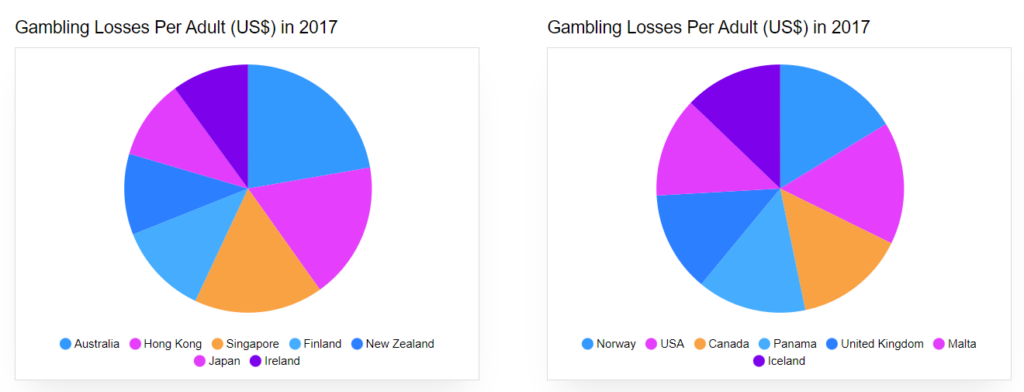
- Australian punters lose about $1,050 per person per year.
- Singapore has the second-highest rate of gambling losses, with about $674 per person per year.
- Finnish gamblers lose on average $515 per person per year.
- Hong Kong gamblers on average lose $$847.
💵 Gambling Losses per Country
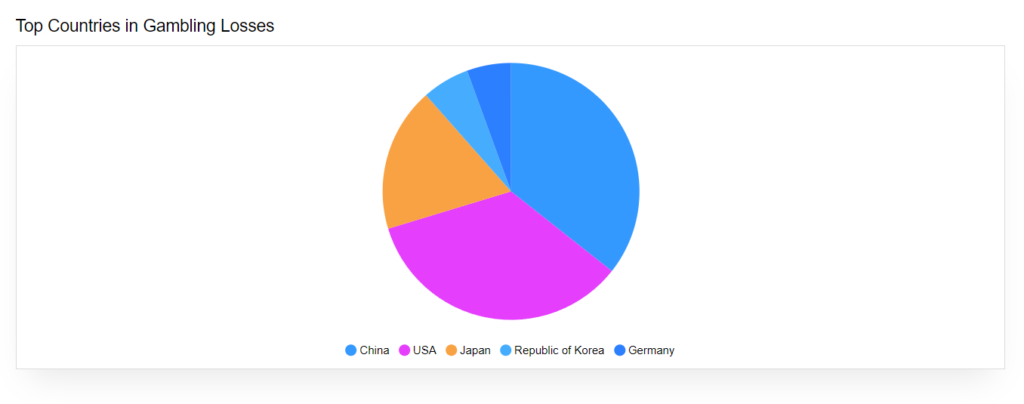
The countries that lead the loss per adult statistics are not necessarily those with the highest gambling losses. After all, there might be more people who gamble less, but still sum up to higher losses. That is what our next chart will reveal:

Therefore, even though the USA is not one of the countries with the biggest losses per adult, it has the second position when we consider the entire country.
🏬 Top Gambling Markets
We selected four of the top gambling markets and unpacked their most relevant stats. Below, you can explore updated data on gamblers, licensed operators, and revenue based on the latest available reports from official regulators and industry bodies.
1️⃣ United Kingdom
The United Kingdom remains one of the most developed and regulated gambling markets in the world. According to the data provided by the Industry Statistics – Annual report from the UK Gambling Commission, online gambling now accounts for nearly half of all betting activity in the British Isles.
This growth highlights a clear transition away from land-based venues, which continue to decline in numbers. The data also suggests that stricter regulations have not reduced overall participation, but instead have changed how and where people gamble. Here is an overview of the stats from the report:

Online slots, lotteries, sports betting

£16.8 billion

8,200

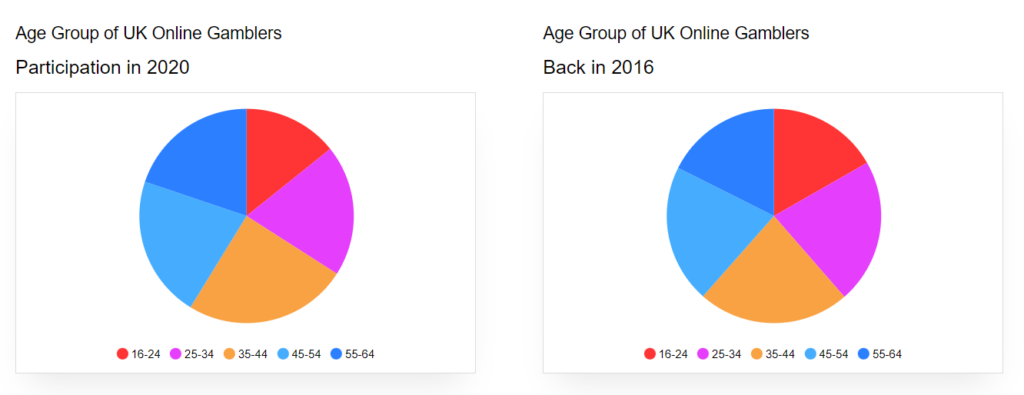
25-44 years old

2,400 active licenses

Online casinos, primarily slots
Revenue Breakdown:
- Online gambling: £7.8 billion
- Retail betting: £2.2 billion
- National Lottery: £3.6 billion
- Land-based casinos: £1.2 billion
- Bingo: £700 million
2️⃣ Australia
Australia consistently ranks among the highest gambling markets per capita. This trend is driven mainly by the popularity of electronic gaming machines, locally known as pokies. A survey by the Australian Institute of Health and Welfare shows that around 73% of adults participate each year.


What stands out in the data is the dominance of pokies, which generate about half of all revenue. At the same time, the rapid growth of online betting, especially sports wagering, signals a transition toward digital channels.

Sports betting and casino games

AU$30 billion

Varies by state

30-49 years old

Slots
Revenue Breakdown:
- Pokies: AU$16 billion
- Casinos: AU$6 billion
- Race betting: AU$4-5 billion
- Sports betting: AU$3 billion
- Lotteries: AU$3-4 billion
3️⃣ Canada
Canada’s gambling market is evolving quickly, in large part due to the expansion of regulated online gambling at the provincial level. A key development is the rise of regulated online markets, especially in Ontario, which has introduced greater competition.

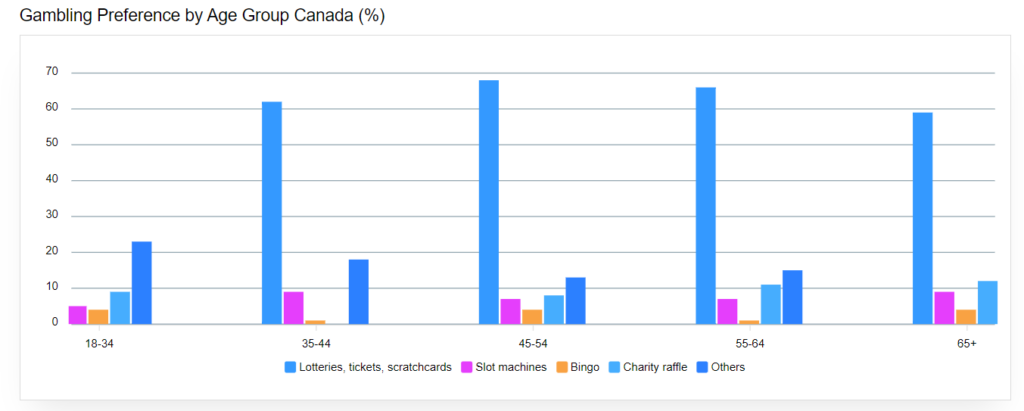
This move suggests that while traditional gambling formats remain popular, future growth will increasingly come from casino sites and sports betting. We consulted the data provided by the Canadian Gaming Association and Statistics Canada, and highlighted some key facts below:

Lottery, casinos, online gambling, sports betting

US$15–17 billion

Varies by province

30–50 years old

Casinos
- Casinos: US$7 billion
- Lottery: US$6 billion

4️⃣ United States
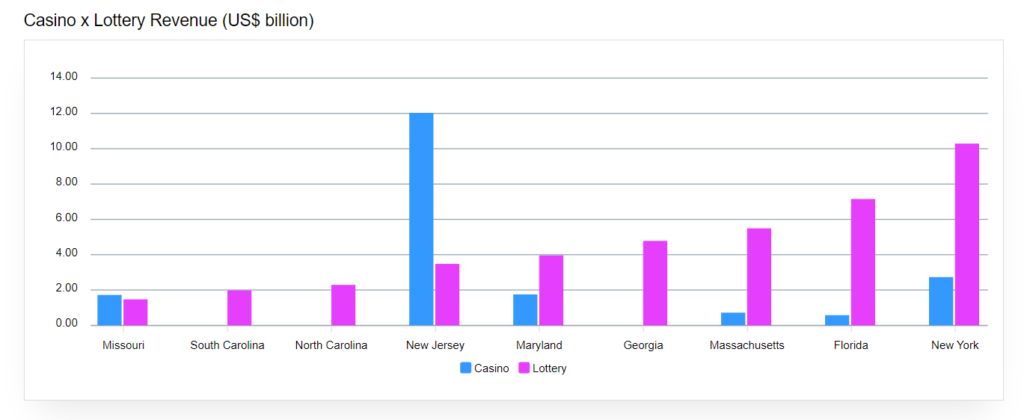
After the legalization of sports betting in 2018, the United States has experienced one of the fastest gambling expansions globally. This rapid growth is largely driven by mobile sports betting and the expansion of legal markets across states.
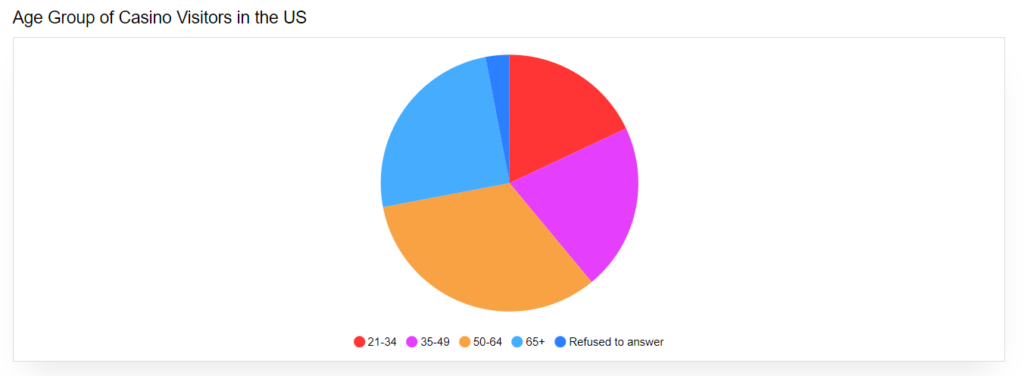
While lotteries and land-based casinos still generate the largest revenue share, the data clearly shows that online and app-based gambling are shaping the future of the U.S. market. Here is a breakdown of the stats as collected by the American Gaming Association for the industry.

Casinos, sports betting, lotteries, online gaming

$66.5 billion

Over 500+ commercial casinos across the U.S.

41-42 years old

Casinos and lotteries
Revenue Breakdown:
- Casinos: $66.5 billion
- Lotteries: $100+ billion (state-level combined estimates)
- Sports betting: $11-13 billion
- Online casinos: $6-8 billion

🎰 Economic and Social Impact of Gambling
Gambling is becoming an integral part of economies around the world. This trend is evident from several indicators, starting with the fact that governments are easing gambling restrictions, mainly because they want to create a new revenue source.
However, at the same time, there is a serious push to foster safer gambling environments, since gambling can be especially harmful to individuals and communities as a whole.
Let’s have a closer look at both sides of the coin, starting by reviewing some of the positive economic impacts:
- Taxes: Legal gambling platforms generate tax income for state and local municipalities. For example, the United Kingdom takes in £3.4 billion in taxes from gambling annually. These funds are used for educational or infrastructure projects
- Employment: Some of the jobs created by the gambling industry include game developers, online casino customer service agents, marketing staff, croupiers, and other employees in land-based casinos.
- Tourism: Every year, millions of people visit gambling locations such as Macau and Las Vegas. The influx of tourists helps the local businesses, such as restaurants and hotels, to make more profits
However, the negative aspect of gambling cannot be ignored. Some of the social costs we must highlight include:
- Addiction Issues: Problem gambling affects a minority of players but creates disproportionate harm. Healthcare and social services often bear the cost of treating gambling-related addiction.
- Financial Harm: Excessive gambling can lead to debt and bankruptcy. This impact extends beyond individuals to families.
- Mental Health Impact: Research shows that about 450 million people have experienced at least one harmful behavioural symptom as a consequence of gambling. In severe cases, gambling addiction is associated with increased risk of self-harm.
Gambling is a paradox of opportunity and potential harm. It can stimulate economic growth, but requires strong responsible gambling measures to reduce the risk of harm.
✅ Future Online Gambling Industry Trends
The gambling industry is entering a new phase shaped by rapid technological innovation. From smarter algorithms to immersive digital environments, the next wave of development focuses on personalization, security, and entirely new ways to experience casino games.
Below, we are going to explore some of these trends, which are already making headway in the industry.
AI-Driven Personalization
Artificial intelligence is a buzzword, and the gambling industry is not immune to its appeal. AI is starting to transform how operators interact with their players. Platforms can now analyze player behavior in real time, such as betting patterns, session length, and preferred games. This data can be used to create advantages for operators and players in several ways:
- Deliver personalized game recommendations
- Tailoring casino bonuses dynamically
- Platforms can boost player retention
However, this level of personalization can also make gambling more habit-forming. The big issue in a gambling context is that AI systems are optimized to keep users active for longer periods.
VR Casinos
Virtual Reality (VR) and Augmented Reality (AR) are bringing online gambling closer to a real-world casino experience. Players can explore virtual casino floors, interact with live dealers, and engage with others in shared digital spaces. Many operators are rushing to embrace VR in order to get an advantage over competitors by offering experience-driven products that appeal to high-value players.
At the same time, bettors are eager for new ways to gamble, and AR can offer a more social and immersive environment. One issue to keep in mind is that higer level of immersion can blur the line between gaming and gambling, potentially leading to higher spending.
Blockchain & Decentralization
Blockchain technology is simplifying payments and building trust in gambling. There is a steady growth of decentralized platforms, which offer provably fair games, with a transparency feature that allows players to independently verify that each game outcome is random.
Operators can now make payments faster, charge lower transaction fees, and reach players worldwide with fewer banking obstacles. Players also benefit from greater anonymity. However, there are a few downsides, such as price volatility and less consumer protection than traditional licensed online casinos.
Fraud Detection
Advanced machine learning models are at the forefront of fraud prevention. These systems can identify suspicious behavior, such as opening multiple accounts, bonus abuse, or irregular betting patterns.
For operators, this means reduced financial losses and better regulatory compliance. On the other hand, players benefit from a safer gambling platform. Although the increased surveillance is a cause for concern about how players’ data is used.
💸 How Is Cryptocurrency Changing Gambling
- Faster withdrawals
- Lower transaction fees
- Easier access for international players
- More banking privacy
- Native tokens for betting
- Blockchain-based loyalty systems
- Decentralized finance, such as staking or yield rewards
🌐 Online Social Casino Trends
The rapid growth of social media platforms has led to the emergence of social casino games. These platforms allow users to engage with casino mechanics, such as slots, poker, or sports betting simulations, without wagering real money. Social casino apps are especially popular on platforms such as Facebook and Google Play Store, where users can find hundreds of apps that replicate real casino environments.
However, instead of real money wagers, players can use a virtual currency and are encouraged to make in-app purchases for optional upgrades. For many users, especially newcomers, these platforms act as a gateway to real-money gambling by increasing familiarity and lowering psychological barriers to entry. Looking ahead, the social casino segment is expected to evolve alongside other gambling trends:
- Increased gamification of real-money platforms
- Integration of virtual economies and digital assets
- Expansion into VR and other emerging technologies
🎰 Most Popular Online Gambling Games

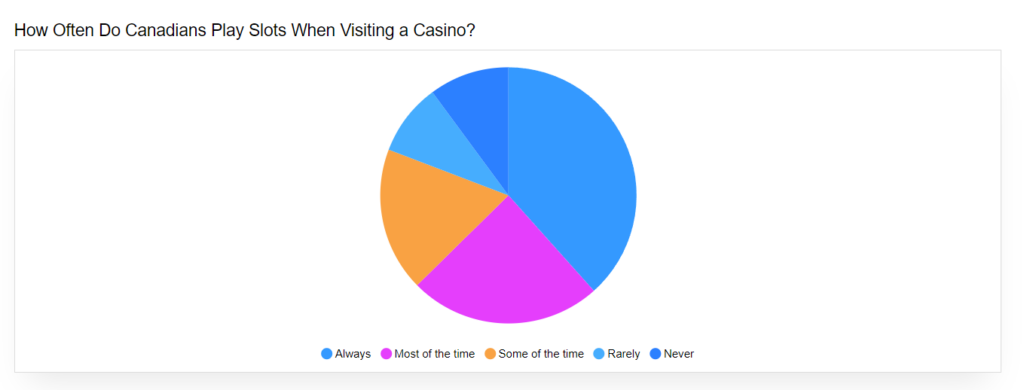
Either in real casinos or online social gambling, slots are the most popular choice among players in many countries worldwide. In fact, it represents most of the revenue in New Zealand, in the UK, and especially in Australia (usually called pokies). Canadians are also known to play slots when visiting a casino, and Finnish players are particularly fond of this casino game.

The biggest representative sector in online gambling is sports betting. Together with the casino games, it is one of the favorites when we take total expenditure into consideration. Even with that participation, it continues to grow at incredible rates of about 7% every year. Recently, many US states allowed sports betting, which has already been reflected in gambling behavior there.

Together with blackjack, poker is one of the most famous card games around the world. It counts with special legislation in some countries and there are several worldwide tournaments. There are even websites specialized in promoting poker rooms with real gambling. The United States and the UK are the top gambling countries with the highest participation of poker among its favorite options.

One of the most remarkable notions provided by this article is the importance of lotteries – especially where gambling is not legal in every manner. The easy accessibility and affordable cost made the lotteries represent the highest revenue in the United States when it comes to gambling: US$80 billion. In the online gambling world, lottery agents are offering access to lotteries worldwide.

One of the most versatile gambling options is bingo. It has its electronic versions played online and in land-based casinos, called video bingos, on top of live rooms with players from all around the world.

✅ Interesting Facts about Gambling

was invented in 1891, but it was similar to what we know today as video poker. The classic 3-reel slot was invented a little bit later, in 1895.

in history US$39,713,982.25 for slot machines was paid back in 2003. It occurred in the Excalibur Hotel-Casino, Las Vegas.

bought in 1992 virtually all possible combinations in a Virginia lottery. Their $5 million investment resulted in winning $27 million.

became addicted to gambling and lost his allowance and tuition money playing card games, which is why he never finished college.

since 1949, but it is legal in the autonomous region of Macau.
☝️ Responsible Gambling
As online and mobile gambling become more accessible, it’s easier than ever to lose track of time and spending. That’s why fostering responsible habits is essential, and here are a few tips to achieve that:
- Set a gambling budget and never exceed it
- Avoid chasing losses, accept losing as part of the experience
- Limit your playing time and take regular breaks
- Do not gamble under stress, alcohol, or emotional pressure
- Use built-in tools such as deposit limits and self-exclusion
- Track your spending to stay aware of your habits
If gambling feels difficult to control, seek support from organizations that offer free and confidential help for treating gambling addiction.
✍️ Conclusion
The global gambling industry in 2026 is characterized by a shift in trends towards a mobile-first approach. Most of this growth is attributed to safe online casinos and sports betting sites. With annual revenues of more than $560 billion, gambling is becoming one of the largest entertainment industries in the world.
The United States and United Kingdom markets continue to grow, and new markets in Africa are not lagging significantly behind the leaders, thanks to the adoption of mobile technology. However, regions such as Australia demonstrate some of the risks associated with this industry, as it has the highest per capita losses in the world. It is likely that in the future, regulation and technological advancements such as AI and blockchain will define this industry.
FAQs
This depends on the country: gamblers in some countries like Australia and New Zealand prefer slot games. Gamblers from India and the USA prefer lotteries, as these are the most cost-effective and most accessible games.
Online casinos and sports betting platforms usually don’t count taxes and don’t charge fees for winnings. However, the casino/sportsbook has a built-in profit from every wager. It is known as the casino edge in casino games and odds for sports betting.
Social games are often a source of entertainment and fun rather than a profitable distraction. Even so, many online casinos frequently provide social gambling tournaments with prizes for their members to entice them to join the platform and move on to other casino games.
The countries where people gamble the most are Australia, Singapore, Ireland, Canada, Finland, Italy, Hong Kong, Norway, Greece, and Spain.
The global gambling market reached over $400 billion, with the online gambling market reaching over $63.5 billion in 2022. The 2024 estimates are about $93 billion, and the 2029 prediction is that the online gambling market size will reach over $153 billion.