

For a start, the key factor in a player’s safety is a reputable and licensed online casino. If you open an account on such a website, you can be sure to get a fair gambling experience. And yet, lots of gamblers feel anxious about the way casinos interfere in dealing. Their main concern is the possibility of receiving large payouts while playing online blackjack. Is online blackjack rigged? The skepticism can even dissuade players from being engaged.
In this article, we are going to discuss the subject. But, before everything else, we make a statement in a responsible way that online blackjack is not rigged, provided that you’ve chosen a reliable online casino. High winnings are possible! But first things first.

 |
Play now |
Quick Jump ⇣
- Why Do Some Bettors Think Online Blackjack Is Rigged?
- How Can Online Casinos Rig Blackjack?
- 5 Reasons Why Online Blackjack Isn’t Rigged
- How to Know If Online Blackjack Game Is Rigged?
- Main Factors That Make a Safe Blackjack Online Casino
- Tips to Get the Most Out of Your Online Blackjack Games Safely
- Conclusion
- FAQ
Why Do Some Bettors Think Online Blackjack Is Rigged?
Blackjack is a casino card game. The rules of its variations may differ, but the basic principle is common to all. It is played between a player (or players) and a dealer. The players do not play against each other here. There is a deck of 52 cards. First, two cards are given to a player. If the value is not enough to win, he can ask to draw another one. The goal is to get to 21, but not to surpass this mark.
You can play classic, progressive, or any other form of online blackjack. Commonly, there is no time limit and you do not have to pay for registration at most online casinos. You can do it from home or on the go. It is as easy as it can be.
You may still suspect that the game is rigged against you somehow because:
- You do not see what is happening on the other side of the display. You have no real cards in your hands.
- You are limited to a single image on your monitor.
- You do not understand the way the software behaves.
The only way out is to believe that regulatory bodies do their work properly, thereby guaranteeing an online casino’s rightful approach.
Of course, you can lose. This is quite natural, as losses and winnings are the key concepts in gambling. There is no need to blame a casino for your losses on naughty grounds. It is much better to learn more about the title, find efficient patterns, build your own strategies, and try again.
It is crucial to set your loss limit to be sure that you are within your budget and enjoy thoughtful playing.
If you still feel that something is wrong with a casino, you should read the article by the end. Commonly, concerns refer to the fixation of online blackjack games and other methods which allow the house to protect itself from the players who count cards. The practice is frequently used in land-based casinos. But it is impossible on a website as the deck is shuffled every game.
Thus, players will hardly be able to benefit from this forbidden technique of gambling online. It means that there are no reasons for online casinos to fix online blackjack games. So, can you relax?
How Can Online Casinos Rig Blackjack?
It seems that there are ways to rig a blackjack game, as the house owns the software and keeps it under control. Technically, they can set it as they like to achieve their goals. For instance, the odds can be established in favor of the house (by the way, we recommend learning more about winning odds in blackjack) and nobody will know about interference.
Unfortunately, there are instances of such unfair events. There were juicy scandals about gambling in the gambling society. It was proved that owners of some websites viewed players’ cards and cooked up the outcome. That happened on a one-time basis.
We can still say that the exception proves the rule—technically, everything is possible. Online casinos can remove some cards from a deck, like aces. And that is not easy to notice (one might even say it is impossible). This is a fraud, of course, and legal websites will not commit the crime. There are other catches, which are technically possible in an online blackjack game.
There is one “but”. Reputable online casinos will never sink to the level of rigging for obvious and meaningful reasons, which we are going to list below.
5 Reasons Why Online Blackjack Isn’t Rigged
Notwithstanding the foregoing, online blackjack games are not rigged. Why not if it is possible? There are lots of reasons for a fair game. We’d like to mention the following external factors which will prevent casinos from cheating on cards.

 |
Play now |
Online Casinos Don’t Make Sense to Rig Blackjack
Casinos make money from their very profitable activities. This business is built in such a way that owners of gambling sites will not be out of pocket. They take the house edge regardless of a player’s outcome. There is no need for rigging and infringing the law.
The risks of being caught red-handed are high, while the benefits are shady.
If you are skilled and lucky enough, you can reduce the house edge—that is true. You cannot, however, avoid paying for it. At the very least, casinos always have a 1-2% advantage over players. Even this minimum provides them with a large profit, taking into account the number of players and sessions. To make matters worse, not all players are skilled. They make mistakes, which increases the odds. As a result, they lose, while the profit of the house grows. Why should casinos cheat if they make enough money in conformity with the law?
Gambling Sites Are Regulated
It is vital to find a reputable casino that is regulated by independent, authorized bodies. These institutions guarantee that the house acts in a fair way and does not cheat gamblers. Frankly speaking, you will hardly find a large online casino that is not regulated.
Reputation is vital for any regulatory body. That is why you can rely on their inspections. In the case of the slightest suspicion of wrongdoing, their business will be closed down.
Legitimate Online Casinos Use RNG Software to Ensure Fair Blackjack
Most games in an online casino are based on the use of the Random Number Generator. The software chooses an outcome in a completely random manner. There are no schemes.
You can count on fair gambling experiences and, at the same time, you can give up all attempts to influence the outcome. There are independent auditors who audit the operations of casinos and test their software, including the Random Number Generators, to prove that all systems operate correctly.
Blackjack Rigging is Far Too Deadly for Online Casinos
If the infringement of regulations and other offenses are found by authorized auditors, a casino will be closed. Even if it manages to continue after it complies with the demand, it will hardly clear its name quickly and attract a lot of customers. The players, particularly experienced ones, will keep away from such a service provider even if this policy is changed in the future. Nobody wants to risk their money.
Customer trust is a pivotal competitive advantage in the gambling industry. If players find out or experience fraudulent activity, they’ll never return. Moreover, they will leave reviews to warn others and ruin the reputation of such a casino. That is another reason for casinos to care about their image and not to rig blackjack.
Casinos Don’t Create Their Own Blackjack Games
You can relax and play blackjack without being afraid of rigging because most online casinos do not develop games. They engage third-party specialists to do it or just license existing titles to offer them on their websites.
The developers adhere to strict industry requirements. The corresponding laws govern the gambling industry in various countries, states, and counties. There are authorized bodies that carry out audits of all participants in this market. That is why developers are concerned with the creation of high-quality products to meet all the standards, as only quality products can be sold at a high price. Otherwise, they will not be successful and just lose business.
How to Know If Online Blackjack Game Is Rigged?
First, you should find a trustworthy online casino. This is the key guarantee of safe gambling. If a website is well-developed and licensed, it means it is legitimate and provides fair services. Here you can definitely forget about rigged blackjack.
If you have found a small, little-known casino without a proven reputation but with perfect terms, a diverse assortment of titles, and a cool design, you can try it. However, you should be realistic and pay attention to the evidence of its reliability.
There are some issues that you should learn about before you start gambling on such an online platform. You should refuse the idea of joining the site if:
- It is not licensed – All major online blackjack sites are licensed by well-known authorities. You can contact customer support and ask why the site has no evidence of their competency. But, we have a guess that this casino has no license because they do not meet safety requirements.
- It is not transparent enough – It is natural when on the website you can view scans of registration papers, licenses, physical and postal addresses, other contacts, privacy policies, user terms, and other important information about the company. If you feel that the service provider is keeping the truth from the users, you’d better avoid this casino.
- It has no customer support – It is very important to get feedback in any available form (by phone or via email). When a casino does not provide players with contact information, it looks suspicious. Even if there is a support service, but it is of poor quality (response is misty or delayed, a specialist is not competent or not friendly), you’d better refuse gambling on this site.
- It has a lot of adverse reviews – Opinions differ. Some users may attack a casino, going negative on it. It is natural when there is a rare and reasonable criticism. However, if there are a lot of negative reviews, the situation obviously smells fishy. It may be a sign of a rigged online casino.
- It has issues with payouts – Fund withdrawal is a very important option that should be considered when you are looking for an online casino to join. If there is a poor choice of payment methods or you find complaints connected with a withdrawal, you’d better continue your search. Find a more reliable gambling website. Fraudulent casinos can refuse payments and block an account without notifications when a player wins a large amount on their online platform. Beware!
Choose a gambling site, taking into account the above signs. If you start playing and feel that you are losing too much, even though you know the rules and use efficient patterns and strategies, you should think of your safety. The casino is probably the reason for your misfortune.
Main Factors That Make a Safe Blackjack Online Casino
You can be sure of the safety of any gambling site if it is licensed. It is better if the authority providing the license is reputable. If you do not know which ones are trustworthy, look for information on the Internet. You will definitely find the UK Gambling Commission and the Malta Gaming Authority at the top of the list. They test the online casinos thoroughly.
We’d like to highlight that an unlicensed online casino is not a shady platform by definition. They can provide fair services, but the risk of fraud is much higher.
In addition to the licenses, other third-party accreditations will also be a positive sign. They can be provided by independent auditors and other certifying authorities in the industry.
Commonly, online platforms offer various services provided by their partners. If they can boast of partnerships with global companies or well-known suppliers, this is an advantage. Pay attention to payment systems cooperating with the platform. Software developers are also important.
Finally, keep in mind that you should know more about the casinos than they reveal on their websites. Do some asking around to ensure that the casino has a positive online reputation. Read stories and reviews on forums and other sector-specific websites. The judge on the overall picture!
Tips to Get the Most Out of Your Online Blackjack Games Safely
We have tried to mention all that you should know about safety when you play online blackjack games. If you take the recommendations seriously, you will be protected. Of course, it does not mean that you will not lose. The result depends on a range of factors. To achieve your goals, you should be tolerant and smart. You can improve your winning chances if you use the following tips:
- It is a good idea to know all about the game. There are basic blackjack strategies and you should know them. It would be better if you found additional strategies and tried them. Blackjack is a simple title, but you can use various ways to play it. Place bets in the best possible way using a blackjack strategy chart, which includes all possible card combinations.
- Pay attention to promotions. Casinos offer lots of bonuses to benefit from. Choose a website that is packed with such special offers, providing you with more chances to save your money. You can get access to free options and so on, which give you more winning chances. Use the opportunities in the best possible way. You should read the terms carefully to avoid disappointment. There are some conditions that restrict the use of blackjack bonuses and so on. Remember about house edge in blackjack too.
- Build your gambling budget and develop a bankroll management plan, which will help you to reduce losses. In other words, you should know the amounts you lose and win to keep it balanced. Thus, you will have statistics that will help you to decide whether the casino is cheating you out of money if the losses are unreasonably high.

Conclusion
In the article, there are tips on how to determine rigged blackjack games, test casinos, and avoid fraud. However, you should understand that these are extreme measures because online blackjack is not rigged. It is not easy technically, as the gambling industry is strictly inspected by authorities. The tight government control provides both safety and fair gambling terms.
Large, reputable casinos are completely legitimate, offering fair terms for their blackjack games. Thus, you can forget about this issue and get engaged in playing online blackjack on a trustworthy website. It is definitely not rigged. Enjoy the entertainment and winning chances.
FAQ
Is it possible to rig blackjack?
Online blackjack cannot be rigged. In order to improve your winning chances, you should improve your gambling skills. There are variations of the title with different rules, and it is important to learn them before getting involved in gambling.
Is every online blackjack game fair?
Online blackjack games are fair if you play at a trustworthy online casino. Ensure that the gambling site is licensed by reputable regulatory authorities.
Is online blackjack profitable?
Blackjack is known for its high profitability. You can expect an RTP of more than 99.5% (the return to the player). However, the value can differ with variations of the title and your skills.
Can online casinos rig live blackjack games?
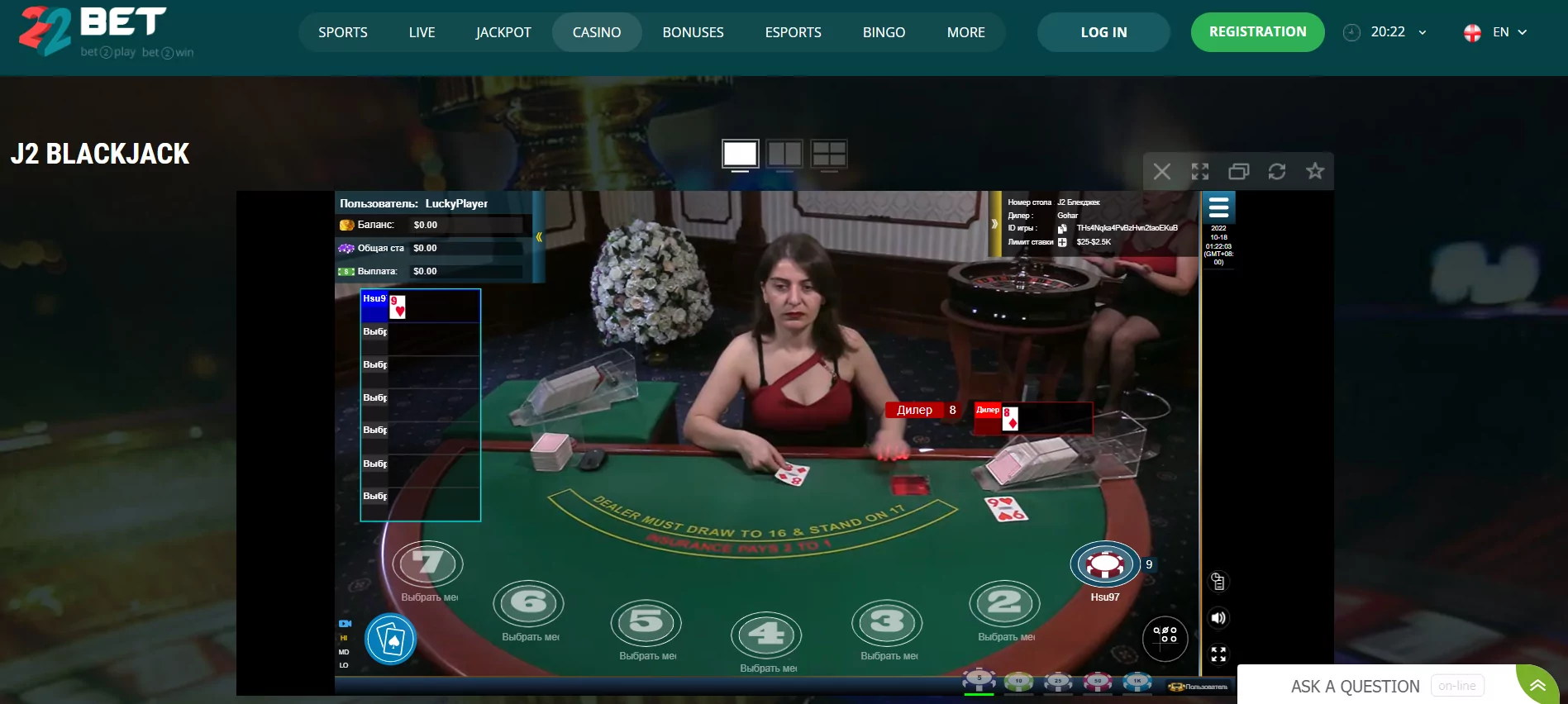
Due to technical issues, it is quite difficult to rig the live blackjack games as they are available on the live stream and you can follow the process. Again, it is important to play on regulated gambling platforms. Also, the arrangement of gaming is quite expensive. The casino will not invest a lot of funds into the stream in order to cheat a couple of players.
Is online blackjack winnable?
Online blackjack is simple. It allows you to win quite a lot. You need some practice to increase your winning chances. There are strategies and other tips to get a higher profit. So, the answer is “yes, online blackjack is winnable.”
Is playing blackjack online worth it?
If you are fond of gambling, you will have lots of fun playing blackjack online. It is pure entertainment that brings money. You can use your knowledge of the rules, your skills, and your strategies to impact the outcome.









 ️
️